

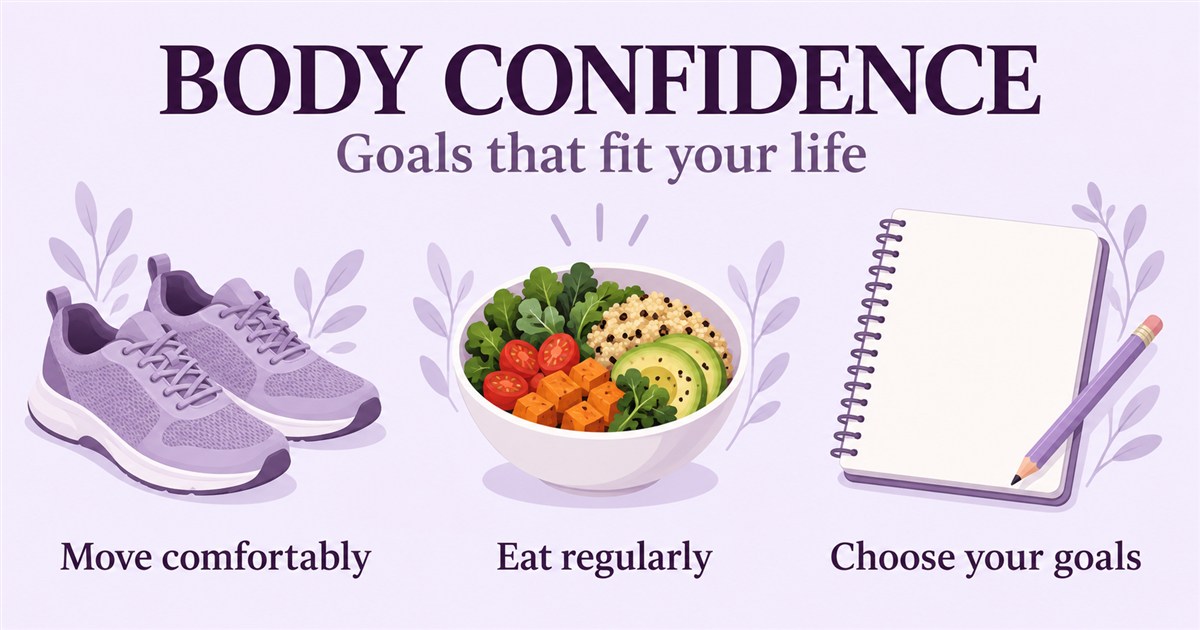
You do not need to regain a particular body shape to deserve confidence or care. If you want to change a routine, begin with a goal that fits your needs: feeling more comfortable, having time to move, or making meals easier to manage. An imagined “perfect body” is not a requirement.
1. Choose a goal that is yours
Write down why the goal matters beyond appearance. For example, “I want to make time for an activity I enjoy.” Choose an action you can adjust rather than a promise to look younger or become a different size.
2. Notice comfort, not a mirror test
Use a comfortable position and vary it when you need to. Standing a certain way does not establish health, and looking thinner is not a measure of success. Pain or movement limitations deserve individualized advice rather than a rigid posture rule.
3. Find a manageable activity
Consider an activity you enjoy and can do within your abilities. Start with an achievable step and adapt it as needed. Do not push through pain or assume someone else’s exercise routine suits you. A qualified professional can help if you have a condition, injury or uncertainty about a new activity.
4. Make food choices practical
Choose meals that fit your budget, preferences and health needs. Frozen food is not automatically inferior to fresh food, and buying organic products is not a requirement for caring for yourself. Avoid moral labels such as “bad” or “failed” for individual meals.
A change in diet does not establish that a food allergy has disappeared. The FDA’s food-allergy guidance explains why allergen avoidance and a treatment plan matter. Do not reintroduce a known allergen on the basis of a personal anecdote; discuss it with an appropriate clinician.
5. Ask before adding supplements
There is no reason to recommend broad-spectrum vitamins to every reader. Needs vary, and supplements can interact with medicines or provide excessive amounts of nutrients. Review the NIH Office of Dietary Supplements’ multivitamin guidance and ask a qualified professional about your own circumstances.
6. Use encouragement without promises
A journal, a supportive conversation or a reminder can help you keep a goal in view. Psychic readings are optional and are not a substitute for healthcare, nutritional advice or a qualified trainer. No reading can guarantee healing or a particular body.
Review your plan with kindness: what was manageable, what got in the way, and what could change? You are allowed to choose a smaller goal or to focus on comfort and daily life instead of appearance.
The idea of visualizing oneself achieving their fitness goals is compelling. It certainly aligns with the principles of positive psychology and can potentially be a powerful motivator.
Replacing bad habits with healthier ones is a fundamental approach to achieving long-term fitness. The emphasis on fresh, nutritious food resonates well, especially given the current discourse on the impact of diet on overall health.
Incorporating the help of psychics for achieving fitness goals is a unique angle. While unconventional, it could provide additional support and motivation for those seeking a holistic approach to personal development.
It’s interesting how the article emphasizes the synergy between physical exercise and mental well-being. The anecdote about Gloria illustrates how maintaining an active lifestyle can be valuable regardless of age.
The concept of rotating exercises to target different muscle groups and avoid plateaus is sound advice. Consistency and variety indeed seem critical for a sustainable fitness regimen.