

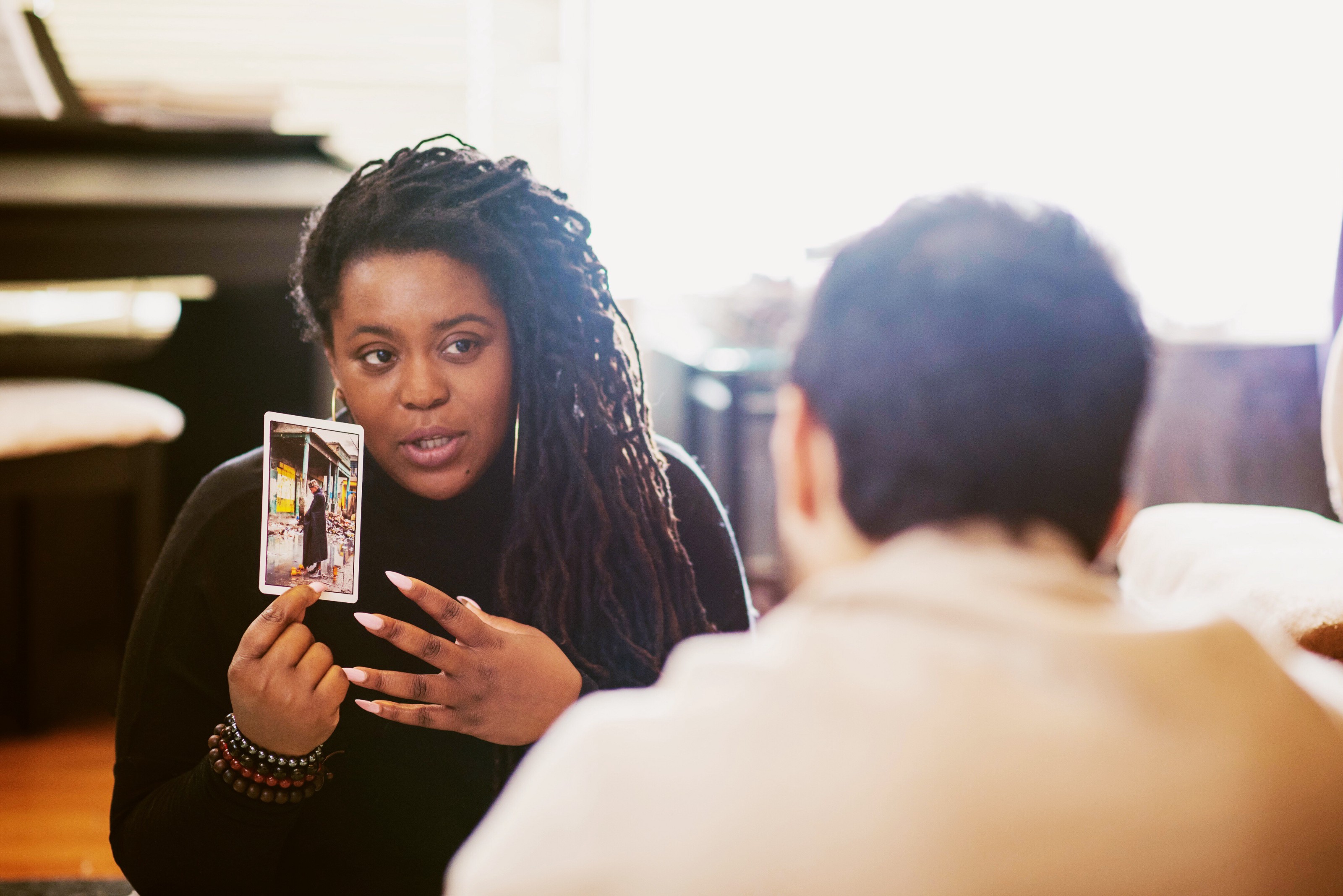
A self-reading can be a quiet way to explore your thoughts about a decision. You do not have to assume everyone has psychic powers or that an inner voice knows the future. Treat the exercise as reflection, not a source of verified facts about health, relationships or other people.
A notebook and a few comfortable minutes are enough. Avoid trying to force visions, voices or an altered state.
1. Settle into a comfortable moment
Choose a place where you can pause without distraction. Sit comfortably and breathe normally. You can keep your eyes open. There is no need to imagine an opening inside your head or suppress every unwanted thought.
If the exercise feels distressing, stop. Ending a reflection does not erase important information or leave you spiritually vulnerable.
2. Ask a question within your control
Try, “What matters most to me about this decision?” or “What information do I still need?” Avoid asking the exercise to diagnose an illness, uncover a partner’s secret or guarantee a career outcome.
Write a brief answer in ordinary language. You do not need to pretend to interview a separate psychic personality.
3. Record an impression without making it a fact
A memory, image or feeling may arise. Note it as an impression and consider other explanations. A picture of a classroom might reflect an interest in teaching, but it does not establish that teaching is your destiny or that you will get a particular job.
Separate three things on the page: what you observed, what you interpreted and what you still need to check.
4. Explore a practical next step
If a theme matters, turn it into a small action. You might read a job description, speak with an adviser or compare realistic options. Consider constraints, evidence and other people’s consent.
Physical sensations are not a signal that you are nearing a psychic answer. Stop and seek appropriate help for concerning symptoms. Sudden throat tightness with breathing or swallowing difficulty can require emergency attention; NHS anaphylaxis guidance describes urgent warning signs. Do not continue meditating through a possible emergency.
5. Finish without a required ritual
Write one useful takeaway and one thing to verify. Put the notebook aside and return to an ordinary activity. You can revisit your notes later without repeatedly seeking reassurance from the same exercise.
When reflection is not the right tool
Hearing voices or seeing things others do not should not automatically be treated as hidden guidance. Seek appropriate healthcare advice about those experiences, especially if they are frightening or disruptive. For immediate danger or instructions to cause harm, seek urgent local emergency help.
For a decision involving illness, legal rights, finances or safety, use qualified advice and reliable information. A reflective reading may help you organise a question, but it cannot replace the answer those sources provide.
For another low-pressure practice, see chakra-inspired reflection without healing claims.
The idea of performing a self-scan with visual imagery and sounds is quite fascinating. It seems like a form of guided meditation.
Indeed, Spicy. It does resemble the principles of mindfulness and meditation practices that are widely advocated for mental health.
The concept of inner psychic abilities is intriguing. However, the method of ‘finding your center’ seems somewhat abstract. It would be interesting to see any scientific grounding for these techniques.
While abstract, some people might find value in visualization techniques for mental clarity.
I agree, Debra. Some empirical evidence supporting these claims might enhance their credibility.
The emphasis on questioning one’s inner-psychic and diving deeper into those answers is thought-provoking. It aligns with self-reflection practices often recommended by psychologists.
Yes, self-reflection is a powerful tool for personal growth. It would be intriguing to see if exploring psychic abilities enhances this process.
It’s a good point, Celia. Recognizing and understanding our inner thoughts can be a valuable exercise, whether or not one believes in psychic abilities.
The article provides a structured approach to exploring one’s psychic abilities, which I find quite methodical. However, I wonder if the results are consistent across different individuals.
I’m curious about how practical these exercises are in daily life, especially with the fast-paced nature of modern society. Can these techniques be integrated seamlessly into our routines?