

Updated
You do not need to buy a reading, planner or course to begin examining a personal goal. A sheet of paper is enough to name what matters, identify a manageable step and review what you learn.
This original worksheet is a planning aid, not a promise that effort will overcome every obstacle. Work, health, money, access and other people’s decisions can affect what is possible.
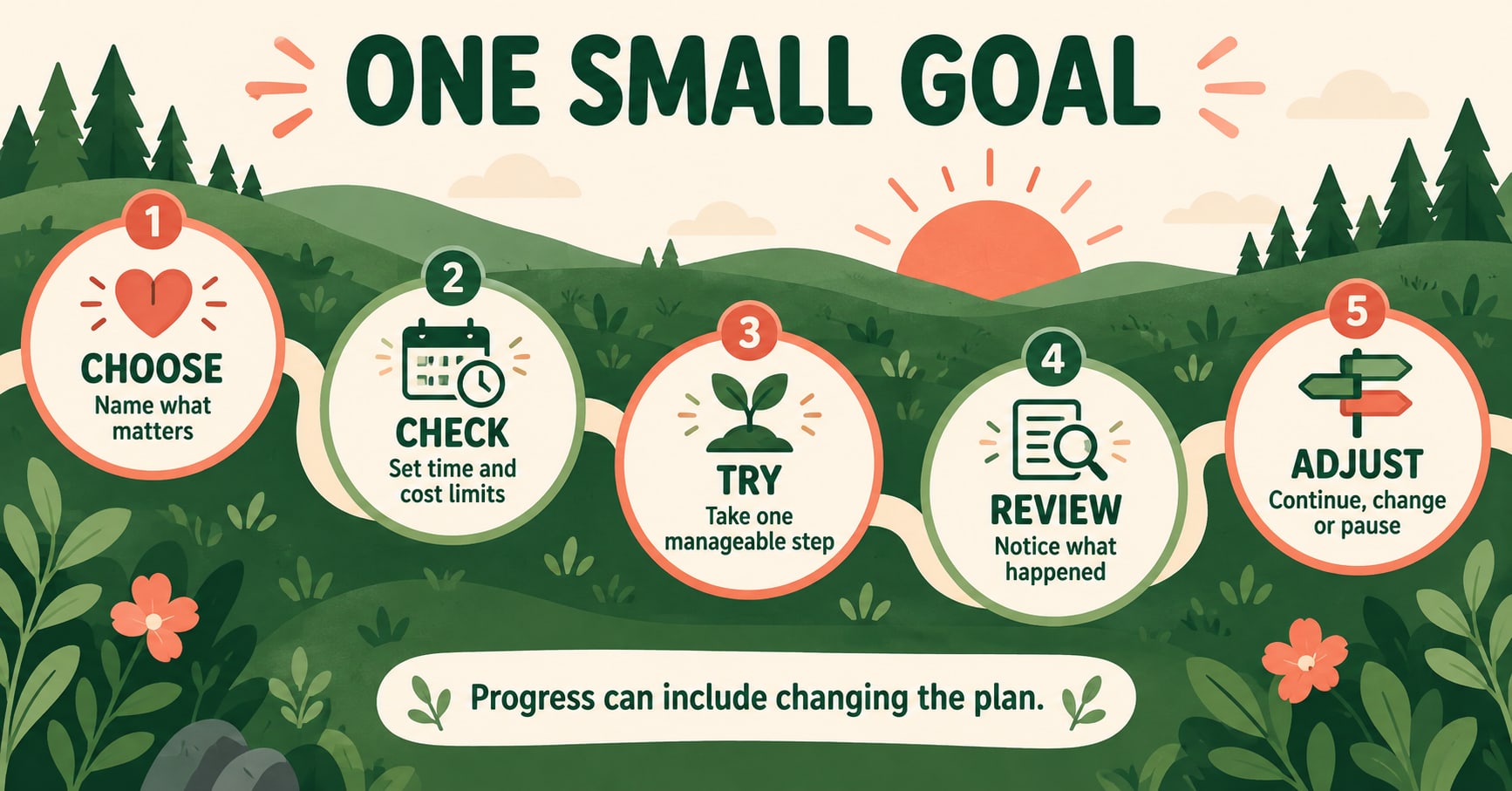
1. Choose: name what matters
Write one change you would value in ordinary terms. “Spend more time making things” is easier to explore than “become completely successful.” Add why it matters to you without borrowing someone else’s definition of a good life.
If you have several priorities, choose one small area to examine first. You are not deciding that the other priorities are unimportant.
2. Check: set time and cost limits
List the resources already available and the constraints the plan must respect. Include caring responsibilities, access needs and the time required for ordinary essentials. Decide what you can try without spending, if that is your preference.
A free trial or promotional offer may have later charges. This worksheet requires no registration or purchase; you can copy its prompts into your own notes.
3. Try: take one manageable step
Choose an action small enough to carry out and specific enough to recognize as done. Examples include reading a course outline, asking a local group about accessibility or finishing a small creative piece with materials you own.
Identify a practical obstacle and a possible adjustment. If a long session will not fit, could you divide the task? If information is missing, could the first step be asking for it?
4. Review: notice what happened
Record the action you took, what you learned and anything that was harder than expected. Keep the review descriptive: “The session conflicted with my work hours” is more useful than “I am bad at following through.”
Do not count only pleasant results. Discovering an unsuitable option can save you a larger commitment later.
5. Adjust: continue, change or pause
Use the information to choose another small step. You might repeat the activity, reduce its scope, seek help or leave it for now. A changed plan is not automatically a failed plan.
| Prompt | Example response |
|---|---|
| Choose | I want to explore drawing. |
| Check | I have paper, a pencil and a short period after lunch. |
| Try | Sketch one household object. |
| Review | I enjoyed the shapes but found the time too rushed. |
| Adjust | Try again at a quieter time or choose a smaller subject. |
Keep support separate from a promise of success
For a career goal, CareerOneStop’s exploration tools can help you investigate occupations and interests. Confirm practical details with the relevant organization before committing.
If your goal concerns emotional wellbeing, our guide to psychic readings and professional care explains their different roles. A personal worksheet or spiritual conversation should not replace support that your situation needs.
Keep the completed worksheet if it is useful, or start again with a smaller question. There is no required streak, special number or deadline for proving your worth.
The discussion on procrastination is insightful. Recognizing when you’re on the wrong path and having the courage to change direction is crucial for personal growth and achieving long-term goals.
The article provides a comprehensive look at the journey one must undertake to find personal and professional fulfillment. I appreciate the emphasis on defining personal success and the necessity of persistence.
The notion of ‘making do with what you have’ can sometimes feel limiting, but the article frames it positively, suggesting that even humble beginnings can lead to great accomplishments. It’s a very encouraging viewpoint.
I agree. Starting small doesn’t mean you can’t achieve big things. It’s all about making the most of your opportunities and staying committed.
Absolutely. Many success stories begin with modest starts. It’s the perseverance and dedication that truly matter.
I found the comparison of perfection to a snowflake quite poetic. It’s a reminder that our paths are unique, and we must tailor our goals and definitions of success to fit our personal aspirations.
The point about taking risks was particularly resonant. Fear often holds us back more than actual obstacles. The article’s advice to embrace risk and learn from failure is sound and empowering.