

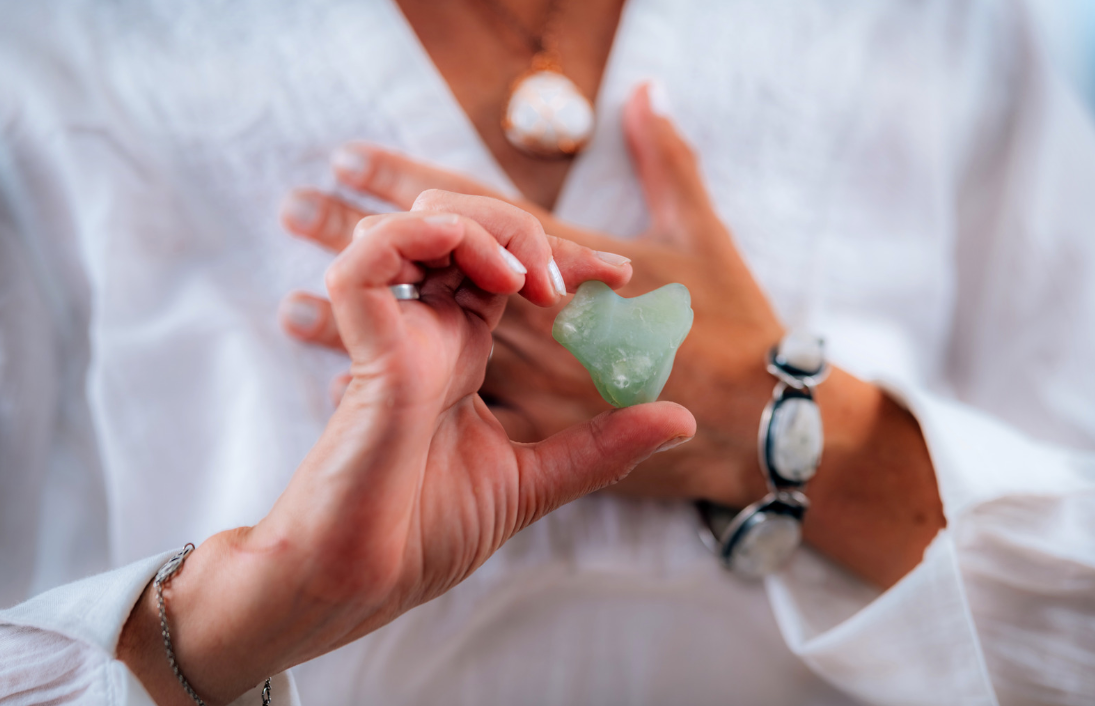
Choosing a chakra stone can be a personal way to explore colour, symbolism and intention. In contemporary crystal practices, stones are often paired with seven chakra themes. These associations are spiritual interpretations, not a medical map of the body: symptoms do not establish a blocked chakra, and a stone should not be offered as a cure.
There is no single “best” stone for everyone. A stone you enjoy and can comfortably afford may work as a reminder of a goal, without needing a promise of special frequencies or healing power.
Seven common chakra-stone associations
Associations vary between teachers and modern crystal guides. The examples below describe symbolic uses rather than effects you should expect a mineral to produce.
Root: stability and everyday security
Red jasper, hematite and black tourmaline are often chosen for grounding symbolism. You might use one as a reminder to review a practical concern: your schedule, support network or an achievable next step. It cannot protect you from danger or remove the need for ordinary safety precautions.
Sacral: creativity and enjoyment
Carnelian and orange calcite commonly accompany creativity themes. Pair a stone with a small creative activity, such as sketching or planning a project. Difficulty creating or enjoying something is not a diagnosis of an energy blockage.
Solar plexus: confidence and choice
Citrine, yellow jasper and pyrite are used as symbols of confidence or personal agency. A useful prompt is, “What decision can I make with the information I have?” None guarantees wealth, success or control over other people’s choices.
Heart: care and relationships
Rose quartz and green aventurine often represent kindness and connection. Reflect on a caring action or a boundary you need. No stone can make another person fall in love, return to a relationship or treat you respectfully.
Throat: expression and listening
Aquamarine, blue lace agate and sodalite are associated with communication. Use the theme to draft a clear message or practise listening. Persistent throat symptoms need appropriate medical attention, not a crystal selection.
Third eye: reflection and imagination
Amethyst, lapis lazuli and labradorite are popular for intuition themes. Write an impression down, then distinguish it from what you can verify. A feeling is not proof of another person’s intentions or of a future event.
Crown: meaning and connection
Clear quartz, amethyst and selenite are often used for spiritual reflection. Consider what gives your life meaning without expecting a stone to reveal a divine instruction or a guaranteed purpose.
Choosing without pressure to buy
- Start with one theme. Choose a question or intention rather than trying to identify a supposed illness-causing imbalance.
- Set a modest budget. You do not need all seven stones, an expensive treatment or a complete grid.
- Check the item. Ask about material identity, treatments, jewellery construction and care instructions.
- Be wary of guarantees. Claims that a stone cures disease, removes a curse or must be bought urgently are reasons to step back.
A simple reflection practice
Place a suitable stone on a stable surface where you can see it. Sit comfortably, breathe normally and consider one question for a few minutes. Finish by writing a practical action—for example, asking for help or setting aside time for a hobby. You can do the same exercise without a stone.
If you choose meditation, NCCIH advises against using it to replace or postpone conventional care. Stop a practice that feels distressing rather than pushing through it to “clear” a blockage.
Keep physical safety separate from symbolism
Keep small pieces away from children and pets. Do not swallow stones, make drinking-water elixirs with them, grind them into powders or use sharp specimens against your skin. Follow material-specific care instructions; water, heat and cleaning products are not suitable for every specimen.
A symbolic object can be meaningful without being a treatment. For a broader introduction to chakra themes, see our chakra reflection guide.
‘Wearing chakra stones as jewelry’—because nothing says spiritual enlightenment quite like accessorizing! But hey, if it makes you feel better, who am I to judge?
*sigh* More stones that magically fix everything? Next, they’ll say they can heal world hunger if you just hold them tight enough! 🙄
“Chakra stone grids”? Now that’s an intriguing concept! I love the idea of combining aesthetics with spiritual practice; it could turn meditation into an art form while promoting inner peace!
What a wonderfully enlightening read! The detailed descriptions of each chakra and their associated stones provide such clarity. I can’t wait to try meditating with some of these beautiful stones!
Honestly, the idea that crystals can influence our chakras feels absurd to me. There’s no empirical evidence supporting these claims, and it seems like just another way for people to exploit those seeking healing.
“Emotional balance through rocks?” Hilarious! Why not just hug a tree while you’re at it? Nature therapy could be the next big thing!
While I appreciate the effort put into this article, it feels a bit too esoteric for my taste. I’d prefer a more scientific approach rather than relying on metaphysical explanations.
“Trust your intuition”—a phrase that sounds wise but lacks tangible guidance. Perhaps including some case studies or testimonials would enhance credibility and provide real-world applications.
This is an impressive synthesis of ancient wisdom and modern holistic practices. It beautifully illustrates how we can integrate our understanding of energy into daily wellness routines.